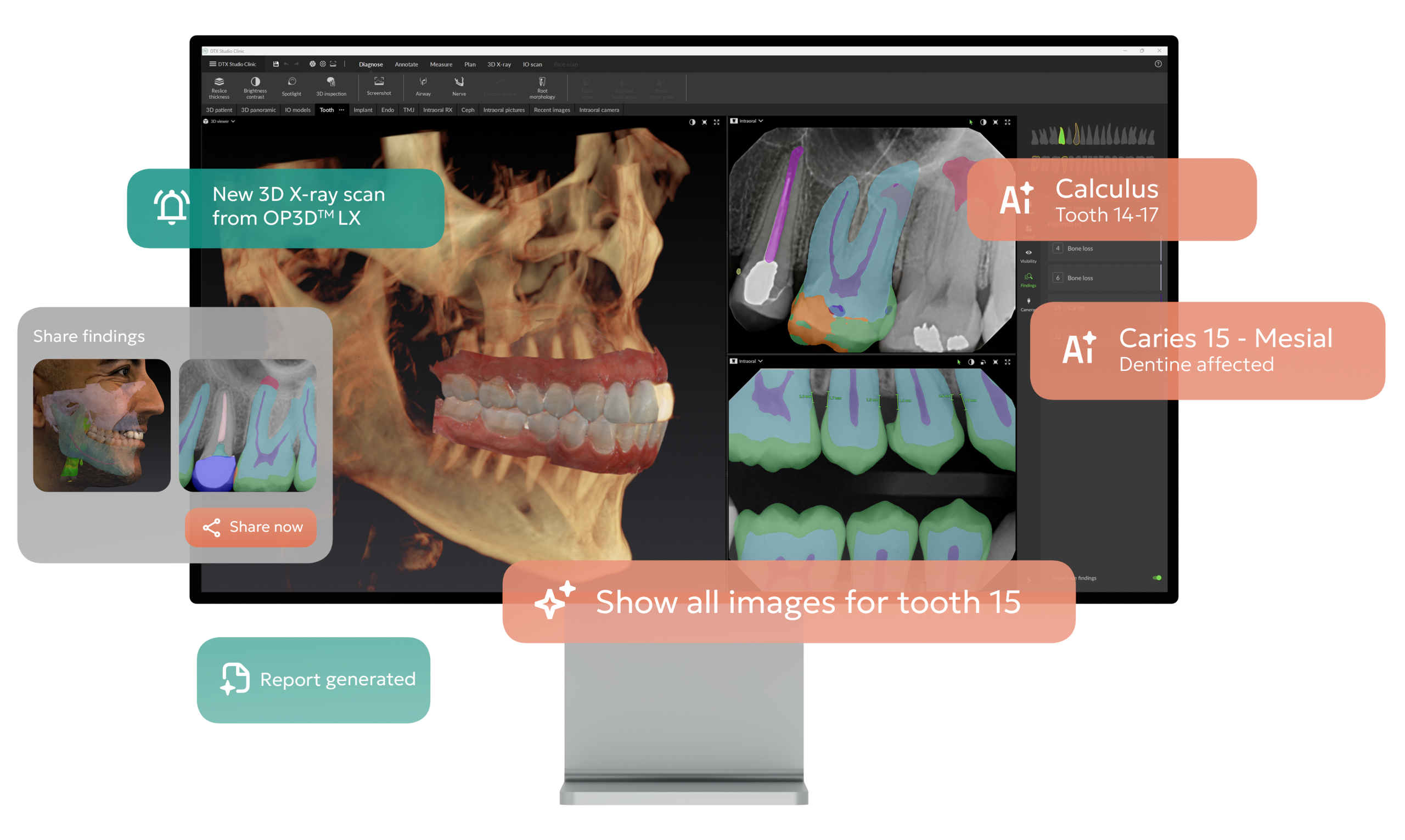
What Is AI‑Assisted Diagnostics
AI-assisted diagnostics in dental imaging refers to advanced, objectively driven artificial intelligence tools integrated into modern dental software that help clinicians analyze radiographs and 3D scans with greater precision and accuracy. These AI systems use machine learning to automatically detect and highlight potential dental findings — including caries (cavities), calculus, bone loss, periapical radiolucencies (dental infections), restoration margin discrepancies, and root canal issues — directly on intraoral X‑rays and other imaging modalities.
Acting as a “second set of eyes,” AI provides evidence-based, unbiased insights that support clinical decision-making, enhance visualization of anatomical structures, and reveal subtle patterns that might otherwise be missed. While this technology is powerful, it is most effective when combined with the expertise and specialized training of an experienced clinician, ensuring AI insights are interpreted accurately and integrated into a comprehensive, patient-centered treatment plan.
Benefits of AI‑Assisted Diagnostics
Enhanced Accuracy & Early Detection:
AI objectively highlights potential issues that may be subtle or easily overlooked, enabling early detection and more precise, proactive care.
Objective and Consistent Analysis:
Standardized evaluation reduces variability across patients and providers, strengthening clinical alignment and supporting consistent diagnostic quality.
Improved Patient Communication:
Annotated images and visual overlays make complex findings easier for patients to comprehend, improving understanding, trust, and treatment acceptance.
Longitudinal Monitoring:
AI supports quantitative tracking of disease progression, such as bone levels or periodontal changes, or other oral health metrics, allowing clinicians to monitor changes over time and make informed, proactive treatment decisions.
Surgical Precision:
AI enhances planning and execution for surgical procedures like dental implants improves functional and esthetic outcomes
Supports Clinical Judgment, Clinician Expertise as Cornerstone:
AI provides objective, data-driven insights, but does not replace the dentist’s expertise. A skilled and experienced clinician remains the cornerstone of diagnosis and treatment planning, interpreting AI findings within the full clinical context to make informed, patient-centered decisions.